 ®
®AuDHD Therapist
A couple is seated across from me, and they've been having the same argument for years. It's never about the dishwasher. There's a thing in the middle of the room, and they can both see it, and neither of them will touch it.
A couple is seated across from me, and they've been having the same argument for years. It's worn a groove so deep that neither of them has to steer anymore—the car travels on its own. Whether they're talking about the dishwasher, money, who reaches for whom at night and who pretends to be asleep—it's never about those things. There's a thing in the middle of the room, and they can both see it, and neither of them will touch it, because touching it costs something right now and leaving it only costs everything later. So they reach for the dishwasher again. The dishwasher is safe. The dishwasher has never once, in the history of dishwashers, been the problem.
I watch them not say it, and I have an unfair advantage in the watching: I'm constitutionally bad at the thing they are so good at.
I'm autistic and ADHD. I found this out almost by accident. A mentor of mine—a psychologist, a professor at Northwestern—mentioned it to me in a hallway, the way you'd mention the weather, after we'd worked together the better part of a year. Have you ever been formally assessed for autism? My first reply was unprintable and affectionate. My second was to go get assessed four times, because if I'm nothing else, I'm thorough. I regret the fourth only because it's the one that handed me ADHD as an add-on. The thing that was apparently obvious to him, and to plenty of others, had been invisible to me for four decades.
Sit with that, because it's the whole point and I almost missed it myself. The same wiring made two things true at once. The instant the suggestion was logical, I integrated it—no defensiveness that survived contact with the evidence, no years of working up to it, just yes, that tracks, let me confirm it four times. And that same wiring is exactly why I couldn't see the thing everyone around me could. That gap—what's obvious to everyone else and invisible to me, and what's obvious to me and invisible to them—has a name in the literature, the double empathy problem, and it is not a defect on either side. It's two nervous systems each missing what the other can't help but notice.
Here's the part of my wiring that matters for the rest of this. I don't get the flinch—that small automatic recoil most people feel a half-second before a hard truth leaves the mouth, the one that reroutes the sentence into something softer, something about the dishwasher. It's turned down in me, or missing, or wired somewhere it can't vote. I say the thing. I've been told, in one register or another, my entire life, that this is a defect. But as a therapist in a therapy room, it's occasionally the only useful thing I bring.
Knowing Was Never the Bottleneck
The reason hard things don't get fixed is almost never that nobody knows what's wrong. People know. Couples know. Families at holiday tables know, every one of them, exactly what's not being discussed. The agency knows which director is the problem. The field knows which of its models stopped working a decade ago. Knowing was never the bottleneck.
The bottleneck is that fixing the thing requires being uncomfortable now in exchange for being better later, and the human nervous system would, on the whole, rather die than make that trade.
And I mean that close to literally. We do it with cigarettes, lit with hands that have read the box. We do it with the conversation we have been not having for so long it's become a third person in the marriage. We do it, magnificently and terribly, with the entire planet. The cost is real, but it's faceless and lives in the future. The discomfort is small, but it's here, in the chest, right now, and it's sharp. Sharp-and-now beats vast-and-later almost every time, which isn't a moral failing. It's just the math bodies run. The old parts of the nervous system handle here-and-now threats with overwhelming force, and they were built long before "later" was a thing worth planning for.
Our own field has been studying this for 60 years and makes every one of us learn it on the way in. The bystander research is the cleanest version: the larger the group that witnesses something wrong, the less likely any single person does anything about it—not because the crowd cares less, but because responsibility thins out across bodies until no one feels like holding enough of it to act. John Darley and Bibb Latané, social psychologists who first mapped the phenomenon in the 1960s, called it diffusion of responsibility, and it's held up in every replication since. Scale the room up and the flinch doesn't weaken; it distributes, which is worse, because now it has no address.
The dishwasher fix doesn't scale any better than the flinch does. A system reaching for the comfortable adjustment instead of the real one is a mechanic changing the oil filter on a car with the wheels off. You can change that filter forever, but the thing is not going to drive. Same flinch, same dishwasher—only now it's an agency, a training program, a profession, a country, reaching for it together, and the bigness of the group is the very thing that guarantees no one will be the one to say the wheels are gone.
The wiring that needs to be examined is the same wiring that decides what gets examined. To put the avoided thing on the table, somebody has to tolerate the discomfort of putting it there—and that discomfort is the precise thing the entire system is built to avoid. So the problem guards itself, though not on purpose. Nobody has volunteered for that job. There's no alarm that sounds when a system declines to look at itself, the way no bell rings in the couple when they choose to argue about the dishwasher for the four hundredth time. Avoidance is invisible to the thing doing it, which is also what makes it permanent.
A Missing Filter, Not a Superpower
There's a version of what I'm saying that curdles into something I don't mean: the Autistic person as wise seer, the holy fool who sees what the rest of you can't. That's flattering and it's false. What's true is smaller and stranger. The signal that hides the avoided thing from most people—the flinch, the pull toward the group, the bone-deep sense that we don't say that here—is quieter in my particular nervous system. I'm not seeing more; I'm missing the static that hides the obvious from everyone else, so the obvious sits there in plain view, humming. It isn't insight; it's a missing filter. I've paid for that missing filter my whole life, in rooms far less forgiving than the therapy room, and I wouldn't romanticize it as a superpower—quite the opposite.
These days, the word neurodivergent does a lot of heavy lifting and it's smuggling in a falsehood. ADHD and autism get filed under the same umbrella, but on the exact axis my argument here turns on—how a nervous system meets discomfort—the two are markedly different. I can say this without condescension because I have both. ADHD doesn't come with the turned-down flinch; the rejection sensitivity that rides with it makes the recoil from social discomfort louder, not quieter. The struggles are real and hard, but they are different, not lesser. The umbrella hides that, and it matters: if you let "neurodivergent" blur the two, you'll walk away thinking some vague neuro-specialness sees through avoidance, when the thing I'm describing is narrow and specific and not even always comfortable to carry.
It's also worth saying why ADHD is the familiar diagnosis and autism the dimly understood one. The reason isn't innocent. ADHD is legible to the culture partly because it's monetizable—there's a market in the diagnosis, the medication, the productivity-hack economy built on top of it. Autism is harder to sell, so it stays stranger to the general public. The familiarity gap tracks what can be monetized, not what's true.
And there's one more difference, one that explains why the deferred cost doesn't stay deferred in my body. The neurotypical nervous system is, by comparison to mine, muted—not as an insult, but as a difference in gain, like a volume dial turned down. A neurotypical can walk into a coffee shop and go into portrait mode like a phone camera: blur the espresso machine, the noon rush, the open mic, and still feel genuinely connected. My system can't blur it. Everything comes in at volume. Which is also why the deferred, abstract, far-away cost—the thing done to the community, to the planet, to the person across from me—does not stay abstract in my body. It arrives now, at volume, with everything else. That isn't wisdom. It's the gain turned up, and the bill arriving on time whether I want it to or not.
What This Means for the Therapy Room
Our entire field runs on the flinch. We're trained in attunement, in validation, in the protection of the alliance, in the careful not-rupturing of the thread between us and the person in the chair. And often that training is exactly right; the soft approach is the clinical one. But sometimes—and I think more often than we admit—we've been trained to soften past the most useful move we could make: naming what's being avoided, the truth the client already knows.
Near the end of the three thousand hours it takes to become a clinician, my supervisor gave me a review that was really just a question he couldn't answer. There's one thing I don't understand, he said. Why do people get well so quickly with you? What are you doing that's different? I've thought about that question for years.
Autism in the public mind is savant syndrome, the party trick. For me, it's high pattern recognition that doesn't respect the walls between fields. I work the way an apothecary works—pulling from sociology, anthropology, neurology, psychology, the Buddhist psychology I was trained in—not because I'm interdisciplinary by ambition, but because the human system is too complex for any single field to hold. The connections, much like my own unpruned synapses, make their leaps without first stopping to ask the social hierarchy for permission.
A tight, aseptic, controlled one-to-one room is precisely what my wiring requires to be an asset instead of a liability—no group to read, no flinch to manage, no hierarchy to negotiate, just the pattern and the person and the work. The thing that makes me good in the consulting room is the same thing that would make me a disaster in most others. I didn't train into this field so much as get born sideways into it, a nervous system that does by reflex the thing the work requires on purpose.
You can't talk a nervous system out of a flinch it's practiced for three hundred thousand years, and I wouldn't wish my missing filter on people who've never had to survive without it. But I know how patterns actually change, because it's the same in a marriage, a treatment team, or a single nervous system: not by argument, and not by hating the old way. The brain works like a forest path. Walk it every day and the path deepens.
Walk a new one and soon, that path defines itself, while weather and disuse reclaim the old one. The brain does this. So do institutions. You don't destroy the avoidance by despising it. You build the harder road—the room where the thing gets said—and you drive it, rough and slow and badly, at first, until it's the established one and the old route is overgrown. The catch is that someone has to drive the new road first, before it's easy, while it still costs something. That first drive is the challenge. It's also the only thing that's ever worked.
We know this, we prescribe it to clients, and we're usually pretty terrible at running it on our own teams, in our own field, at our own holiday tables.
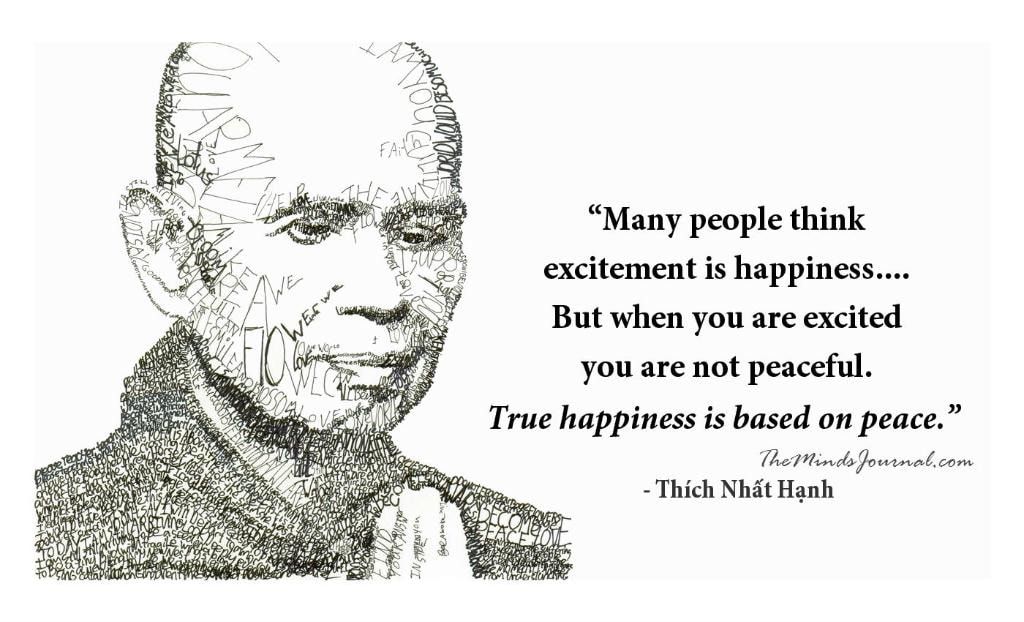
When I was diagnosed, I had no idea how much I'd been missing—and if I was missing that much of the outside, I had to assume I was missing that much of myself. So I did the thing my wiring does: I put all the LEGOs on the floor and started sorting. What in here is me and what's a mask? Knowledge is a core value for me, which is to say it's load bearing, which is to say the autism wouldn't let me leave the question alone. The Buddhists I practice with—Plum Village, the Thich Nhat Hanh lineage—have a phrase for what followed, after that: little deaths. I experienced the death of a self I thought was mine.
What the sorting turned up was the hardest thing in the pile: I loathe inauthenticity, and I'd been participating in it without knowing. So I started tracking—plainly, the way I track everything—what I gave, what I got, where the equity was and where it wasn't. I don't believe in family the way the lexicon uses the word. I define family by necessity and by merit: the people I want to celebrate with and lament with, the ones I pull in closer because they meet me. I believe the old saying gets it backward. Water, for me, has always been thicker than blood.
I'd been with my spouse for sixteen years when I turned that same lens on us. Her unwillingness to meet me equitably turned out to be my limit—a limit I couldn't have seen without the insights my AuDHD diagnosis handed me. By year twenty we were divorced, which is the cleanest proof I have of what I've been highlighting: the avoided truth doesn't care how much it costs to say. It was already true. In my case, I finally stopped reaching for the dishwasher.
So here's the question I'd leave you with—the one I now use as my whole measure of who belongs in my constellation of chosen family. When you have the best day of your life, and when you have the worst, who do you call? Those are your people. Everything else is lexicon.
Watch: Mx. Love C. Dialogos speaks on being an AuDHD therapist — watch on YouTube.
Mx. Love C. Dialogos, LMFT, is a clinical psychotherapist, clinical supervisor, and Buddhist chaplain in the Plum Village tradition, licensed across multiple states. They are the author of Relationship Styles and the novel Happiness Unintentional*.*
Explore Topics
Written by
Mx. Love C. Dialogos, LMFT
Content creator and writer sharing insights and stories.
© 2026 Love Psychotherapy, LLC. All rights reserved. Love Psychotherapy® is a registered trademark.


